Deploy AI with confidence
Sweep helps teams prepare for AI by normalizing schemas, documenting metadata, surfacing dependencies, and reducing tech debt — the very foundation of audit-ready, multi-agent orchestration systems.
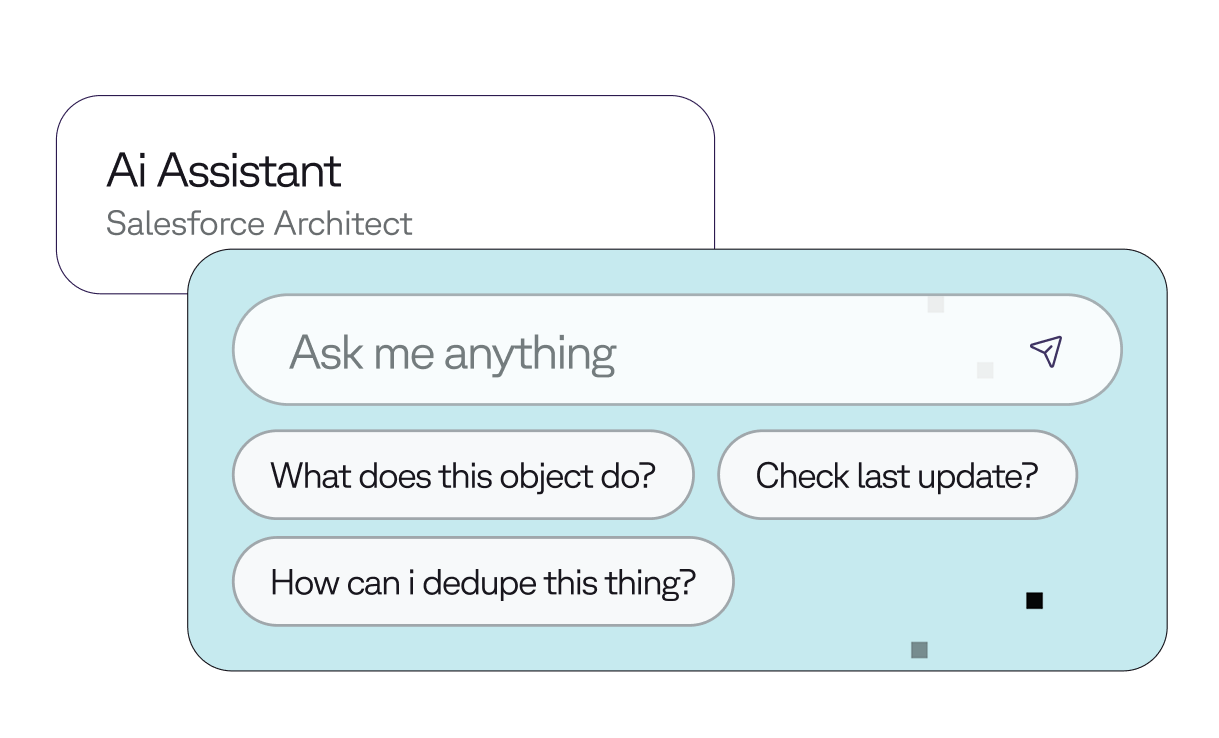
Prepare your org for AI - before AI prepares you
Unify your metadata foundation
AI is only as reliable as the schemas they operate on. Sweep helps you normalize your Salesforce foundation before agents deploy.
Flag automation risk
Overlapping Flows, legacy Workflow Rules, undocumented automation chains introduce hidden risk. Sweep maps dependencies so teams can deploy AI with confidence.
Enforce governance guardrails
AI requires strong governance. Implement clean permissions, role hierarchies, and auditable change management so agents operate within controlled boundaries.
From AI ambition to structural readiness
Normalize your data model before deploying agents
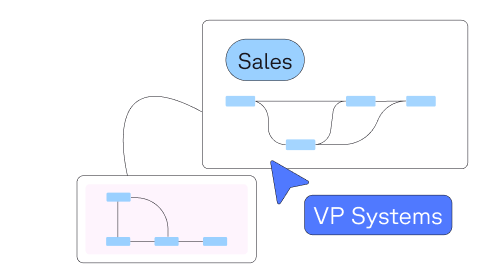
Normalize your data model before deploying agents
Agentforce and other agentic AI platforms act on your existing architecture. If that architecture is inconsistent or fragmented, AI amplifies those inconsistencies.
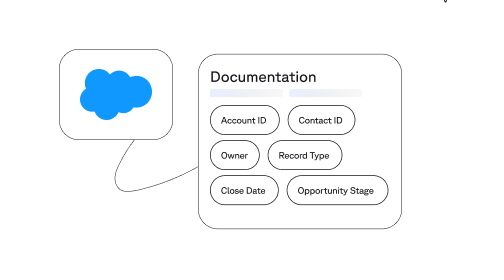
Sweep’s Agentic Layer ingests and maps:
- All metadata types, including objects, fields, picklist values
- Surfacing undocumented dependencies and legacy logic
- Tech debt and metadata divergence
Organizations implementing AI on unified, governed foundations significantly outperform those that deploy on unstable architecture.
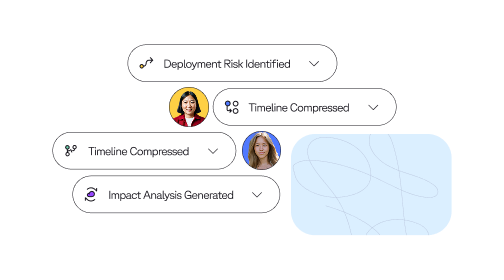
Reduce tech debt before enabling autonomy
Many Salesforce AI projects fail because of layered automation, undocumented logic, and unmanaged technical debt.
Without systematic tech debt management, agents inherit automation conflicts, deployment failures increase, rebuild cycles erode AI ROI, and governance risk expands.
Sweep helps teams manage and reduce technical debt by:
- Mapping automation conflicts before agents execute
- Identifying any redundant Flows or deprecated Workflow Rules; and
- Enabling structured remediation before deployment
Instead of reactivity, teams can resolve tech debt deliberately, allowing them to establish the foundation for audit-ready, multi-agent orchestration systems.
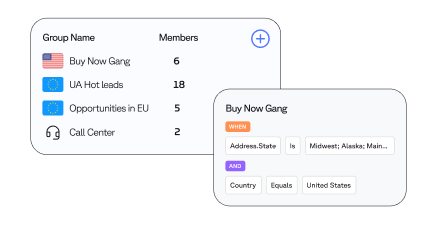
Modernize legacy automation before AI acts
Many organizations deploying AI are still running deprecated Workflow Rules and overlapping Flows. Build Mode enables safe modernization. Instead of generating automation in isolation, Build Mode:
- Verifies schema before generation
- Detects missing fields and picklist mismatches
- Identifies automation conflicts
- Deploys dependent components atomically
Accelerate migration and modernization
AI readiness often requires modernization first. These reductions directly compress Salesforce AI implementation timelines.
In a real-world Workflow Rule migration powered by Sweep’s Agentic Layer:
- 47 Workflow Rules migrated in 1–2 days vs. 3–6 weeks
- Flow build time reduced from 30–60 minutes to 2–3 minutes
- Migration planning reduced from 2–3 days to 30 minutes
Extend readiness across systems
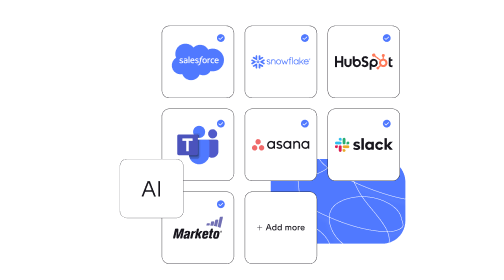
AI initiatives rarely stop at a single Salesforce instance. In multi-org and cross-system environments (Salesforce, ServiceNow, Snowflake, Data 360), structural misalignment creates downstream risk.
Sweep extends dependency visibility across orgs and systems, exposing:
- Schema divergence
- Cross-platform automation impact
- Metadata duplication
- System-wide change propagation
AI performs best on unified architecture.
Identify and accelerate AI ROI
Agentic AI platforms only deliver measurable ROI when your deployment succeeds.
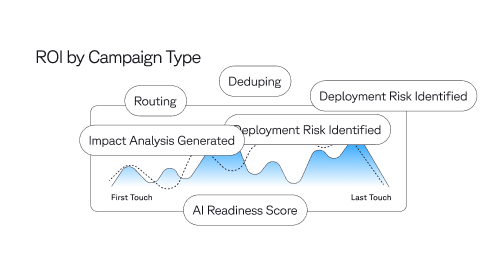
A Sweep-led agent readiness audit helps quantify and accelerate AI ROI by:
- Reducing Salesforce AI implementation failures
- Compressing deployment timelines
- Eliminating investigation overhead (70–90% faster time-to-answer)
- Accelerating impact analysis (15x faster in enterprise environments)
- Reducing long-term tech debt management burden
Organizations deploying AI on clean, governed foundations achieve materially higher success rates. AI ROI depends on structural readiness.
How it works
Connect your system
Sweep securely indexes Salesforce and connected systems into the Unified Metadata Graph.
Contextualize everything
Deterministic parsing maps schema alignment, automation conflicts, dependency lineage, governance exposure, and multi-org divergence.
Act safely
Modernize legacy automation, reduce technical debt, and deploy AI agents on a verified, explainable foundation.
Customer stories

Challenge:
Oneflow’s team inherited a fragmented Salesforce configuration and initially mapped a year-long rebuild.
Implementation:
Using Sweep’s Documentation Agent to understand dependencies and Automations to rebuild safely, they compressed the timeline to under four months.
Results:
- Full reconfiguration completed in <4 months
- Weeks-long projects reduced to days
- Improved cost efficiency
“I have enough Salesforce experience to say that projects that would have taken us weeks, took only days.”



Challenge:
Graphite implemented Salesforce with external support but needed ongoing agility.
Implementation:
Sweep enabled internal ownership of routing, automations, and Slack workflows without sacrificing governance.
Results:
- Reduced long-term reliance on external partners
- Automated deal-room creation and renewal alerts
- Increased operational visibility across revenue teams
“I gloriously wear our Salesforce Admin hat, without the certification.”


Ready to implement your AI agents?
Before deploying Agentforce or launching AI implementation initiatives, ensure your architecture can support safe, governed automation. Start with an Agentforce Assessment and a comprehensive Agent Readiness Audit. We’re here to show you how.