Build a Data 360 foundation your agents can trust.
Data 360 is the customer data foundation Agentforce reasons on, but it is only as trustworthy as the metadata, identity logic, models, and upstream Salesforce data beneath it. Most Data 360 programs go wrong the same way: teams ingest before they fully understand what exists upstream and how it connects. Sweep brings Data 360 into your Agentic Layer, creating a metadata-only model of your customer data foundation and the Salesforce context behind it. Design the foundation before you build on it.
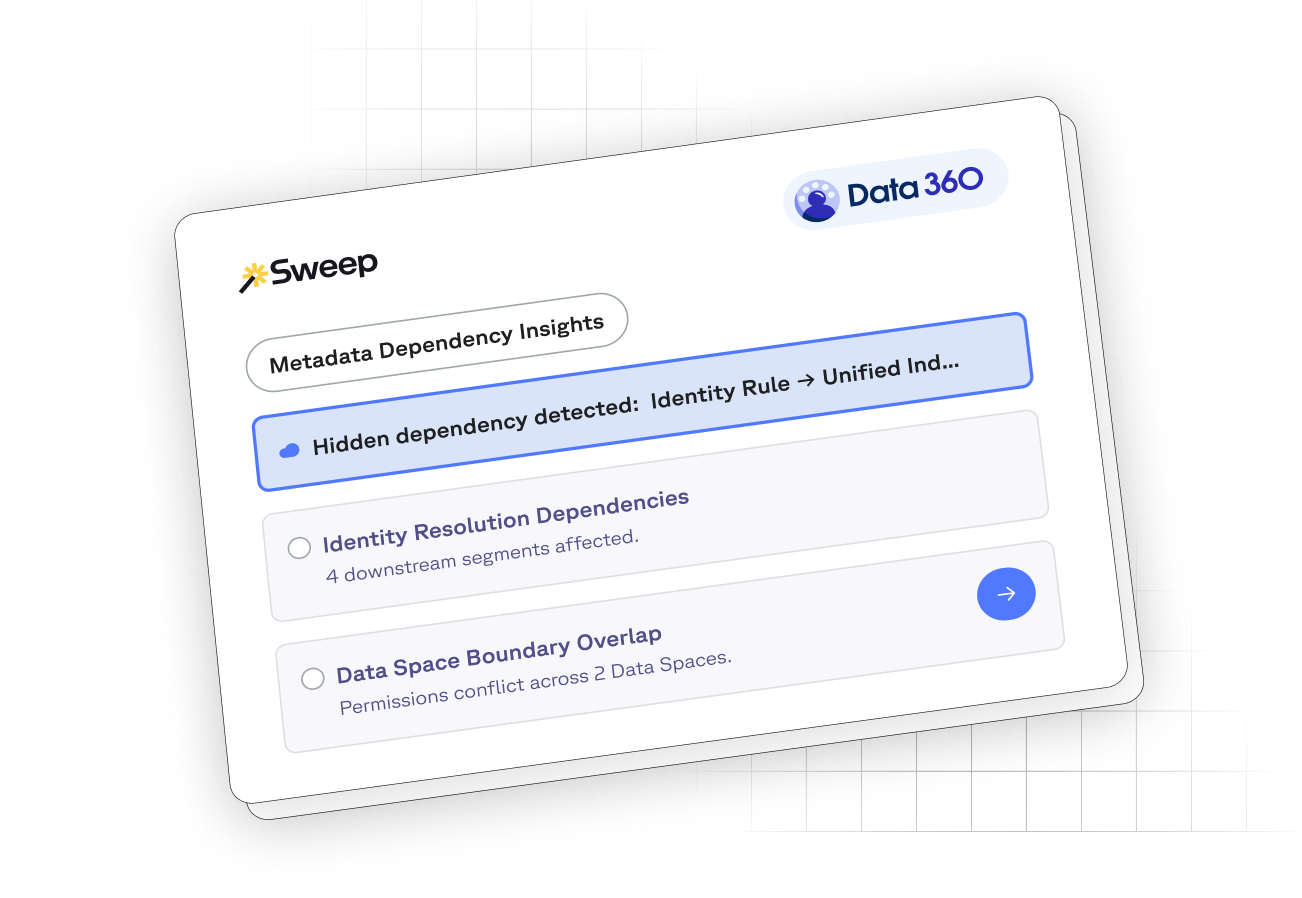
One layer. Every system. Built for complexity.
Sweep brings your customer data foundation into one Unified Metadata Graph - so implementation owners and architects can see how customer context is structured and where it comes from, across Salesforce and Data 360 and out to the systems and agents that act on it. The same Discover → Design → Build → Monitor lifecycle, now spanning the customer data foundation.
Map the foundation before you ingest.
Ask in natural language about Data Streams, DLOs, DMOs, Identity Resolution rulesets, Calculated Insights, Segments, Activation Targets, and Data Spaces — plus the Salesforce objects, fields, and automations that feed them. Weeks of manual pre-implementation inventory become a query.
Trace identity-relevant data to its source
Sweep helps teams find identity-relevant Salesforce fields, see where they live and how they're used, and understand how they flow into the Data 360 model — so match logic is designed on evidence, not assumption.
See how customer context moves across systems.
Salesforce captures engagement, Data 360 harmonizes the profile, the warehouse may hold history, Segments and Activations drive experiences, Agentforce acts on all of it. Sweep maps these relationships so teams see how context flows before they build, change, or activate.
What you unlock with the Data 360 Platform
Reduce risk before and after go-live.
Before go-live, understand the Salesforce objects, fields, automations, and permissions Data 360 will depend on. After, know how a change to a stream, model, rule, segment, or activation ripples outward. Sweep assesses dependencies and cross-system impact at both stages - before change becomes rework.
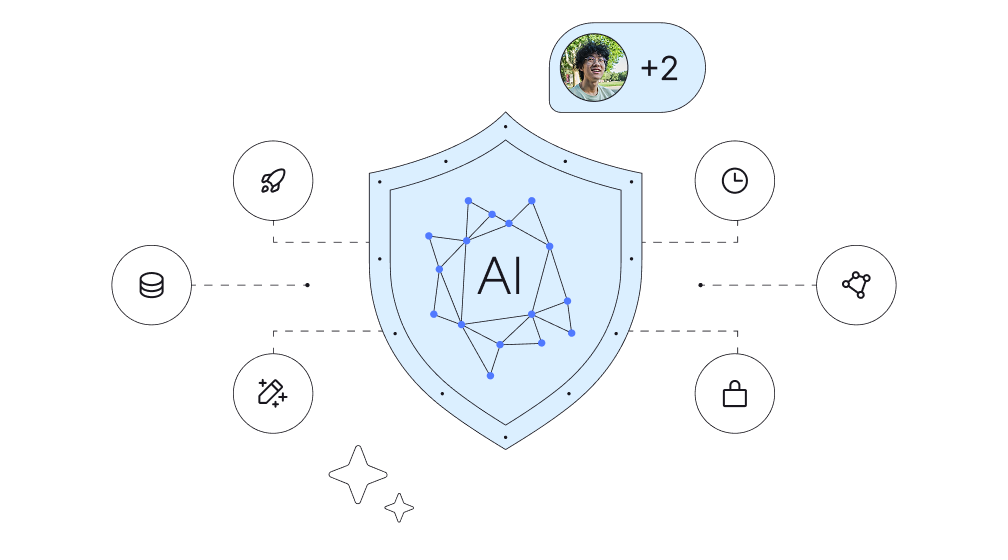
Design identity and activation on a foundation you can see.
Sweep connects identity-relevant fields, DMO structure, and segmentation and activation logic into one model - so teams decide how to configure, change, or expand Data 360 grounded in how the data is actually structured upstream.
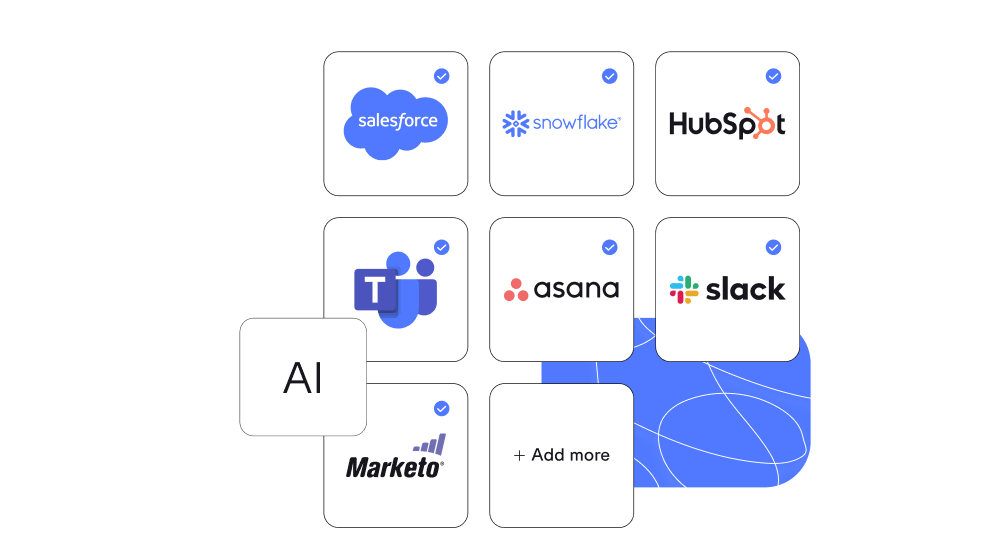
End-to-end lineage across Salesforce, Data 360, and Snowflake
Salesforce CRM feeds Data 360 via Data Streams, creating Data Lake Objects that map to Data Model Objects. Identity Resolution produces unified profiles that power Calculated Insights and Segments, which activate into Salesforce clouds, external systems, and Snowflake.
Sweep maps this entire flow into a single metadata graph. Trace a field from a Salesforce object to a unified profile, into a Segment, and through activation. Questions like “Where did this field come from?” and “Where is it used?” are answered instantly.
Impact analysis before you ship changes
Data 360 environments are tightly coupled. A change to a DMO field, Data Stream, identity rule, or Segment can cascade into downstream workflows and activations.
Sweep exposes upstream and downstream dependencies before deployment so teams can assess risk in advance instead of discovering breakage in production.
Understand your Data 360. Change it safely.
Clarity before configuration. Impact analysis before deployment.