Implement Salesforce correctly and easily, from day one
Instead of layering brittle Flows, scattered routing rules, and manual documentation, implement Salesforce inside a unified, agentic workspace where your metadata, automations, and deployment logic stay connected.
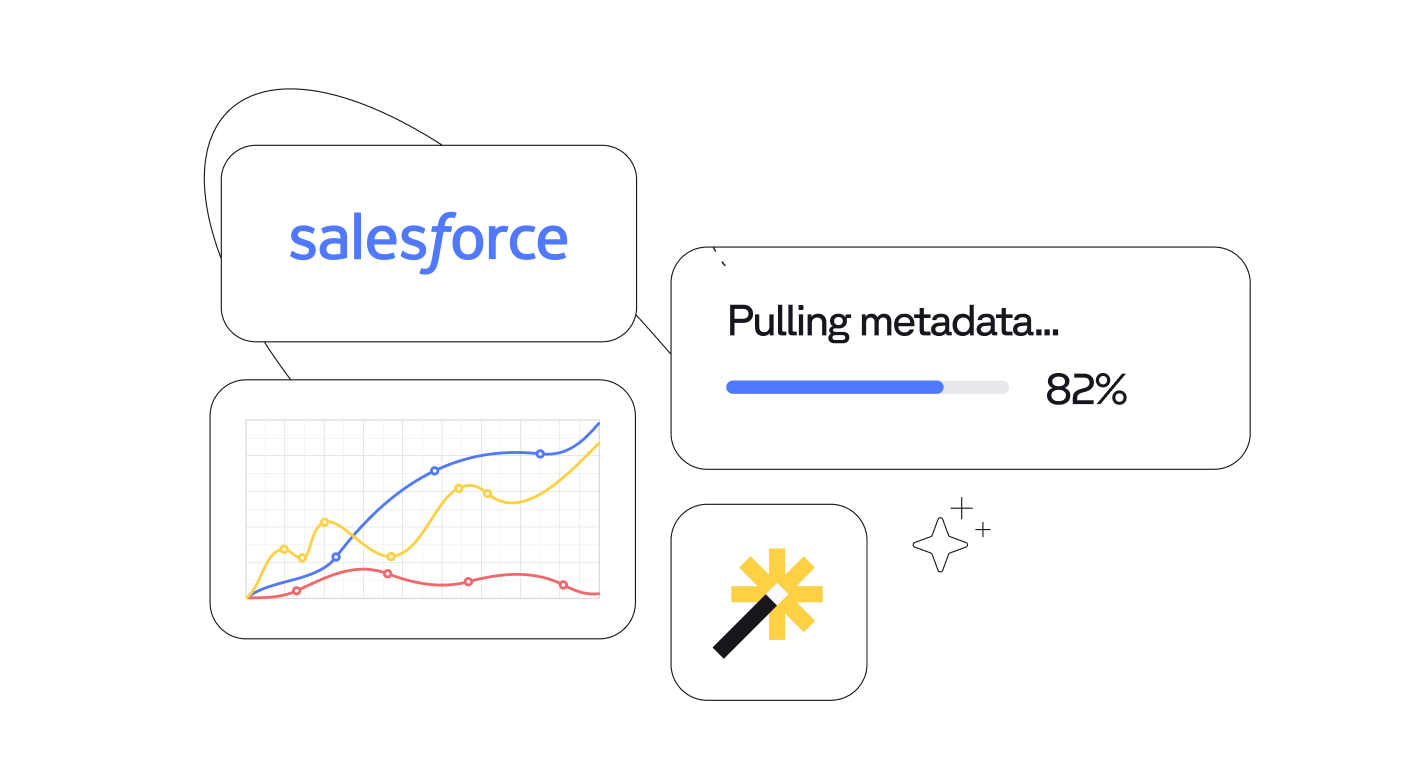
From first setup to scalable foundation
Unify your metadata foundation
AI is only as reliable as the schemas they operate on. Sweep helps you normalize your Salesforce foundation before agents deploy.
Flag automation risk
Overlapping Flows, legacy Workflow Rules, undocumented automation chains introduce hidden risk. Sweep maps dependencies so teams can deploy AI with confidence.
Enforce governance guardrails
AI requires strong governance. Implement clean permissions, role hierarchies, and auditable change management so agents operate within controlled
See your entire Salesforce before you build
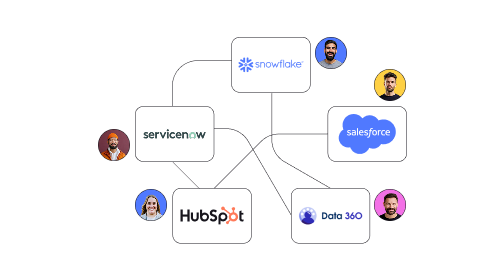
Align Sales, Marketing and CS before you build
Most Salesforce implementation debt starts long before the first Flow is created. It starts when teams configure stages, ownership rules, and handoffs without full alignment.
With Sweep’s Visual Workspace, you can:
- Map lifecycle stages visually
- Overlay ownership transitions across teams
- Simulate handoffs before building automation
- Validate process alignment before configuring objects
Instead of discovering misalignment after go-live, you design once, align stakeholders early, and implement from a shared blueprint.
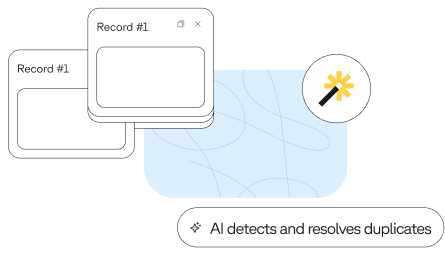
Design your schema with future-proofing in mind
Schema decisions made during implementation often live for years. Adding fields and objects without seeing how they relate creates long-term clutter and redundancy.
Before creating anything in production, you can:
- Visualize object relationships and lookup dependencies
- Model custom objects before deployment
- Identify redundant objects early
- Prevent shadow fields and overlapping data models
You can go beyond just creating fields and design a structure that supports reporting, automation, and scale from day one including the data foundation needed for a clean Salesforce AI agents implementation down the road.
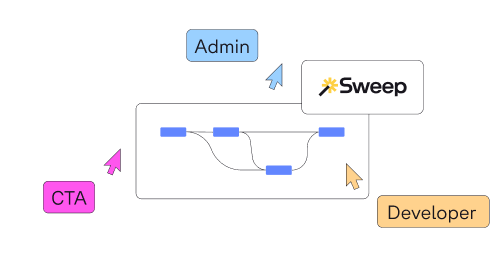
Plan for hiring and geo expansion before it happens
Headcount growth and territory changes are inevitable. Brittle routing logic and rigid ownership models break the moment your team scales. With Sweep, you can:
- Model new territories before rollout
- Preview ownership cascades and reassignment impact
- Stress-test round-robin distribution Ensure automation scales with new headcount
Implementation becomes resilient to growth so expansion doesn’t require emergency reconfiguration.
Keep documentation built-in from implementation on
Most teams document Salesforce only after something breaks. By then, tribal knowledge has already formed.With Sweep:
- Metadata is indexed continuously
- Automations are explainable instantly
- Routing logic stays visible
- New hires onboard faster
Documentation becomes embedded into your implementation, so clarity remains as your org evolves.
How it works
Rapid implementation
Launch Salesforce in days instead of months. Sweep removes the usual implementation bottlenecks so your team can get live quickly without sacrificing structure.
Design and configure your architecture
Use the Visual Workspace to map lifecycle stages, model objects, and design automations before deploying them directly to Salesforce.
Unlimited scale
Salesforce should grow with your business, not hold it back. Sweep helps your system adapt as teams expand, processes change, and new products are added.
Customer stories

Challenge:
Oneflow’s team inherited a fragmented Salesforce configuration and initially mapped a year-long rebuild.
Implementation:
Using Sweep’s Documentation Agent to understand dependencies and Automations to rebuild safely, they compressed the timeline to under four months.
Results:
- Full reconfiguration completed in <4 months
- Weeks-long projects reduced to days
- Improved cost efficiency
“I have enough Salesforce experience to say that projects that would have taken us weeks, took only days.”



Challenge:
Graphite implemented Salesforce with external support but needed ongoing agility.
Implementation:
Sweep enabled internal ownership of routing, automations, and Slack workflows without sacrificing governance.
Results:
- Reduced long-term reliance on external partners
- Automated deal-room creation and renewal alerts
- Increased operational visibility across revenue teams
“I gloriously wear our Salesforce Admin hat, without the certification.”


Ready to stop reverse-engineering your own system?
No more wiki archaeology. Just deterministic system knowledge, grounded in your metadata.